
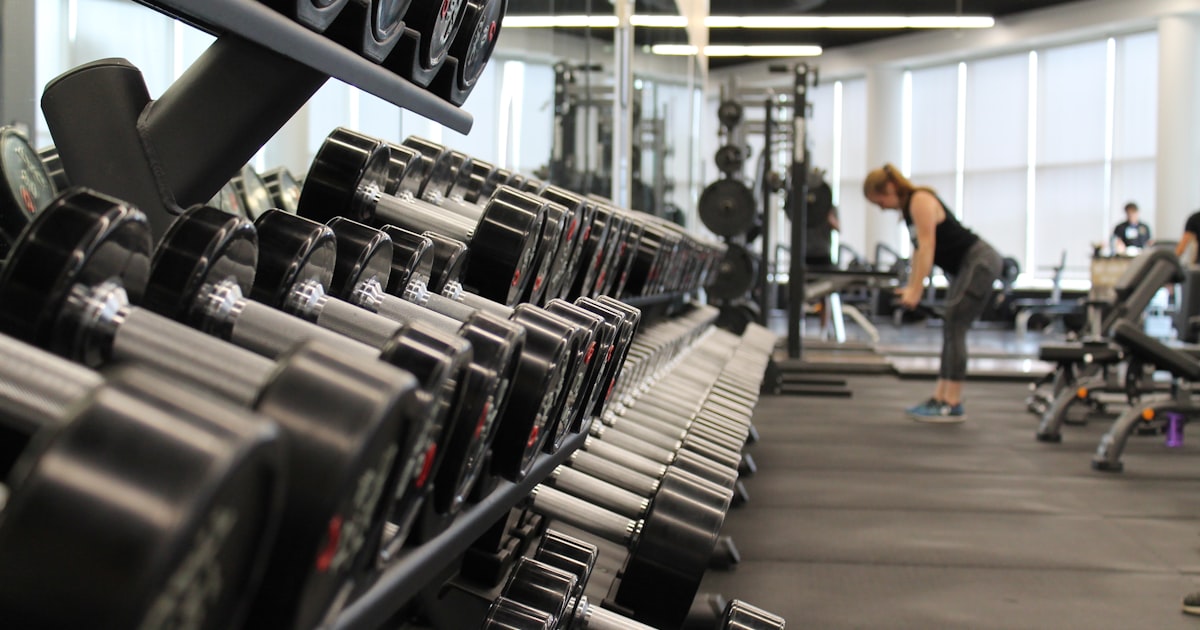
Here's a fact that should make you angry: until 1993, it was standard practice to exclude women from clinical exercise research. The National Institutes of Health didn't require the inclusion of women in federally funded studies until that year. Before then, the vast majority of exercise physiology research was conducted exclusively on men — and the recommendations from that research were applied to everyone.
That means the foundational knowledge we have about how hard to train, how much protein to eat, how long to rest, and how to periodize workouts was built on male biology. Not yours. And yet every gym program, every fitness influencer, every 'one-size-fits-all' training plan you've ever followed was designed around a body that doesn't cycle, doesn't fluctuate hormonally every week, and doesn't experience the metabolic shifts that yours does.
The Gender Data Gap in Exercise Science
The problem isn't just historical. A 2021 review published in the British Journal of Sports Medicine found that only 6% of sport and exercise science research was exclusively female. Six percent. Even in mixed studies, researchers rarely accounted for menstrual cycle phase — meaning the data was averaging out hormonal fluctuations that fundamentally change how women respond to exercise.
Why? Because female hormones are 'inconvenient' for researchers. Controlling for menstrual cycle phase adds complexity, cost, and time to studies. It's easier to study men, whose hormonal environment is relatively stable day to day. So that's what science did. For decades.
Women are not small men. We have a 28-day hormonal cycle that affects every system in our body — including how we respond to exercise. Ignoring that isn't simplification. It's negligence.
What This Means for Your Training
When you follow a standard 'progressive overload' program that has you lifting heavier week after week with no variation for your cycle, you're fighting your biology. During your follicular phase (when estrogen is high), your body is primed for intensity — you build muscle more efficiently, recover faster, and have higher pain tolerance. But during your luteal phase (when progesterone dominates), your core body temperature rises, your metabolism shifts to burning more fat and less carbohydrate, and your recovery slows down.
Pushing through a high-intensity program during your luteal phase doesn't make you tougher. It increases your risk of injury, elevates cortisol, disrupts your hormonal balance, and can even contribute to missing periods (hypothalamic amenorrhea). This isn't weakness — it's physiology.
The 'Just Push Through' Culture Is Hurting Women
Fitness culture glorifies consistency and hustle. 'No excuses.' 'Same time every day.' 'Push through the pain.' This messaging was built by and for men whose testosterone levels don't dramatically shift every week. For women, this mindset can be actively harmful.
A 2016 study in the Journal of Sports Medicine found that female athletes who trained according to their menstrual cycle phases — going harder in the follicular phase and backing off in the luteal phase — gained significantly more strength than those who followed a standard unchanging program. Let that sink in: training LESS in certain weeks produced BETTER results.
- Women who trained with their cycle gained 32.6% more strength in one study vs. those who trained the same way all month
- Injury rates in female athletes peak during the late luteal and early menstrual phases when ligament laxity increases
- Female athletes are 2-8x more likely to tear their ACL than males — and risk peaks around ovulation when estrogen surges affect ligament elasticity
- Overtraining in the luteal phase increases cortisol, which can suppress progesterone production and worsen PMS
The Protein Myth
The standard recommendation of 1g of protein per pound of bodyweight was — you guessed it — derived from studies on men. Women process protein differently depending on their cycle phase. During the follicular phase, estrogen enhances muscle protein synthesis, making it a more efficient window for muscle building. During the luteal phase, progesterone shifts your body toward using more amino acids for fuel rather than muscle repair.
This doesn't mean women need less protein — it means they may benefit from timing their highest protein intake around their follicular and ovulatory phases, when their body is most efficient at using it for muscle growth. But no mainstream fitness program accounts for this, because the research was never designed to discover it.
Calorie Counting Doesn't Account for Your Cycle Either
Your basal metabolic rate increases by 5-10% during the luteal phase. That means your body burns more calories at rest in the two weeks before your period. If you're eating the same number of calories every day (as most 'macro tracking' programs recommend), you're under-eating during the second half of your cycle. This triggers increased hunger, cravings, fatigue, and — ironically — can slow your metabolism over time.
The fitness industry's response to luteal-phase cravings? 'Discipline.' 'Willpower.' 'Just don't eat the carbs.' But your body is asking for more food because it NEEDS more food. You're not failing your diet. Your diet is failing you — because it was never designed for a body that cycles.
If your fitness plan doesn't account for your menstrual cycle, it was designed for someone else's body. Full stop.
What the Research Actually Shows for Women
The good news: the science is catching up, even if slowly. Here's what recent female-specific research tells us:
- Follicular phase (days 1-14): Best time for high-intensity training, heavy lifting, and pushing for PRs. Estrogen supports muscle growth, recovery, and performance.
- Ovulatory phase (days 14-16): Peak strength and endurance. However, watch for increased joint laxity — warm up thoroughly.
- Early luteal phase (days 17-21): Moderate intensity is ideal. Your body shifts to fat-burning mode. Great for longer, steady-state cardio or moderate strength work.
- Late luteal phase (days 22-28): Reduce intensity. Focus on recovery, mobility, and lower-impact movement. Your body needs rest, not punishment.
- Menstrual phase (days 1-5): Listen to your body. Some women feel fine training; others need full rest days. Both are valid.
The Industry Is Starting to Change (Slowly)
In the last few years, athletes like the US Women's Soccer Team have started tracking their menstrual cycles to optimize training. Nike has invested in female-specific training research. The IOC has published guidelines acknowledging that menstrual cycle phase affects performance. But for the average woman walking into a gym, the programs on the wall, the advice from trainers, and the content on social media still follows the male-default model.
Change is happening — but it's slow. And in the meantime, women are overtraining, under-recovering, losing their periods, and blaming themselves for not keeping up with programs that were never designed for them.
What You Can Do Right Now
- Track your cycle — know what phase you're in and how it affects your energy, strength, and recovery
- Periodize your training — go hard in the follicular phase, moderate in early luteal, and easy in late luteal and menstrual
- Eat enough — especially in the second half of your cycle when your metabolism increases
- Stop comparing your performance week to week — you're working with a different hormonal environment each week
- Find programs designed for women — not just 'women's versions' of men's programs, but training that accounts for your cycle
- Question fitness advice that doesn't mention hormones — if a program treats every day the same, it wasn't built for you
Train with your cycle, not against it
Sister Glow Up gives you daily workout recommendations adapted to your cycle phase — so you push hard when your body is ready and rest when it needs recovery. No more guessing, no more fighting your biology.