
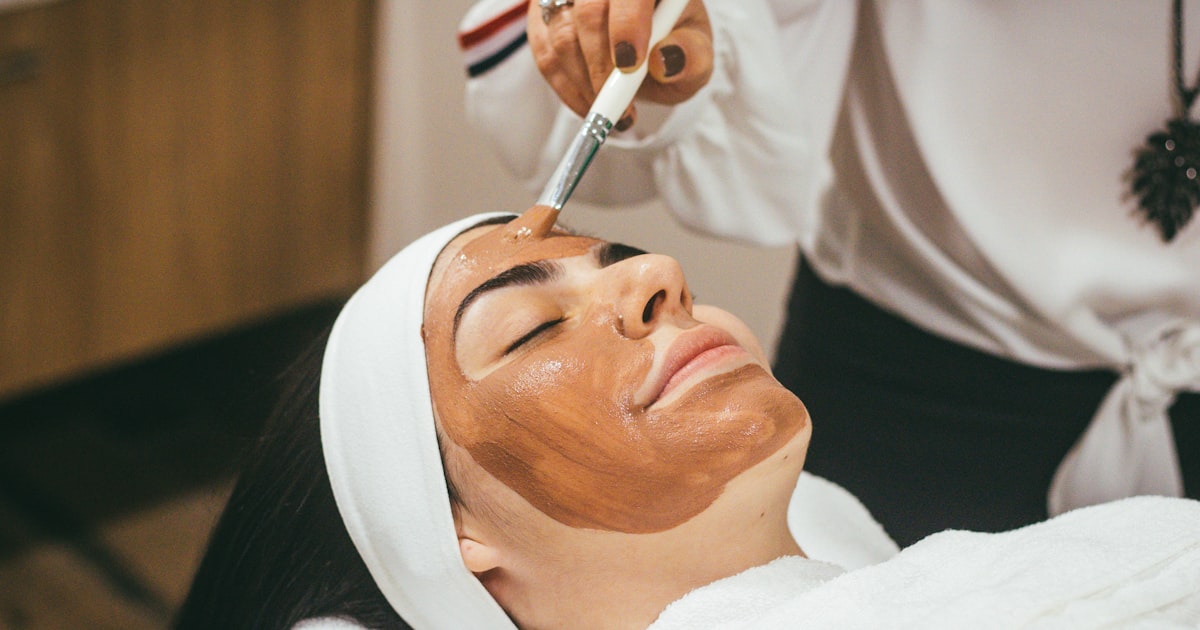
Your skincare routine is only as good as its timing. You can own all the right products — the retinol, the vitamin C, the niacinamide, the ceramides — and still get mediocre results if you are using them at the wrong point in your cycle. The same ingredient that transforms your skin in week two of your cycle can irritate and inflame it in week four. Timing is not a detail. It is the strategy.
Cycle syncing your skincare means adapting what you use, when you use it, and how aggressively you apply it based on where you are in your menstrual cycle. It is not complicated, and it does not require a complete product overhaul. It requires understanding what your hormones are doing at each phase — and letting that knowledge guide your routine decisions.
The Hormonal Skin Connection
Your skin has receptors for estrogen, progesterone, and androgens (testosterone-family hormones). When these hormones fluctuate — which they do throughout your cycle — your skin's behavior changes at a biological level. This is not anecdotal. It is measurable in oil production, collagen synthesis, inflammation markers, and barrier integrity.
Estrogen and Skin
Estrogen is skin's best friend. When estrogen is high — primarily in the follicular and ovulatory phases — your skin produces more collagen (keeping it plump and firm), retains more moisture, generates new skin cells more efficiently, and maintains a stronger barrier against environmental damage. Estrogen also suppresses sebum production, which is why your skin tends to be less oily in the first half of your cycle.
Progesterone and Skin
Progesterone has the opposite effect on many skin parameters. When progesterone rises — primarily in the luteal phase — sebum production increases, the skin's surface becomes more prone to congestion and pore clogging, body temperature rises (increasing sweat and potential irritation), and the inflammatory response to bacteria becomes more pronounced. Progesterone is the primary driver of luteal-phase breakouts.
Androgens and Skin
Androgens — testosterone and its relatives — spike around ovulation and also rise slightly during the late luteal phase. Androgens directly stimulate sebaceous glands, driving oil production. In women with androgen sensitivity (common in PCOS and hormonal acne), even small androgenic spikes can trigger significant breakouts, particularly on the jawline, chin, and upper neck.
Phase 1 — Menstrual Phase (Days 1–5): Protect and Recover
During menstruation, both estrogen and progesterone are at their lowest. Your skin is in a state of low-hormone vulnerability: collagen production is reduced, moisture retention drops, and the barrier is at its weakest. Any breakouts triggered during the luteal phase are now healing, but the inflammation residue can make skin appear dull, uneven, and sensitive. This is the phase where most women's instinct to reach for actives is at its worst — and ironically, when those actives will do the most damage.
What Your Skin Needs
- Barrier repair: Ingredients that rebuild the skin's protective lipid barrier
- Deep hydration: Both humectants (draw water in) and occlusives (seal it in)
- Calm and soothe: Anti-inflammatory ingredients to quiet remaining post-luteal inflammation
- Gentle cleansing: Preserve what little sebum your skin is producing — it needs it
Recommended Ingredients and Approach
- Cleanser: Cream or balm cleanser — avoid foaming cleansers that strip the barrier
- Serum: Hyaluronic acid (2-3 molecular weights for layered hydration), peptides for repair
- Moisturizer: Rich cream with ceramides (rebuild barrier), squalane (skin-identical emollient), and niacinamide (barrier repair at low concentrations)
- Spot treatment: Centella asiatica or azelaic acid on healing breakouts — avoid benzoyl peroxide on sensitive menstrual-phase skin
- SPF: Always, even in winter
- Skip: Retinol, AHAs, glycolic acid, strong BHAs, vitamin C in high concentrations
If your skin is particularly reactive during menstruation — common for women with sensitive skin types — consider a full 'skin rest' day once or twice this week: just cleanser, a simple moisturizer with ceramides, and SPF. Nothing extra. Give your barrier space to repair.
Phase 2 — Follicular Phase (Days 6–13): Activate and Brighten
As estrogen begins its rise through the follicular phase, your skin follows. Cell turnover accelerates, collagen synthesis picks up, moisture levels increase, and the barrier strengthens. By day 9–12, most women are experiencing their clearest, most hydrated, most resilient skin of the month. This is your window to use active ingredients — your skin can both tolerate and respond to them more effectively here than at any other point in the cycle.
What Your Skin Needs
- Exfoliation: Remove residual dead cells from the menstrual-phase slowdown
- Brightening: Vitamin C and other antioxidants capitalize on peak collagen-synthesis conditions
- Cell turnover: Retinoids are most effective and least irritating during this phase
- Light hydration: Your skin is producing more of its own moisture — you need less help
Recommended Ingredients and Approach
- Cleanser: Gentle gel or foaming cleanser — your barrier is stronger now
- Exfoliant: AHA (lactic acid, mandelic acid, or glycolic acid) 2–3 times per week in the first half of follicular; or BHA (salicylic acid 0.5–2%) if pores are a concern
- Vitamin C serum: L-ascorbic acid 10–20% for brightening and collagen support — pair with ferulic acid for stability
- Retinol: Start here if you are a retinol beginner. Use 2–3 nights per week. This phase has the lowest irritation risk.
- Moisturizer: Lighter lotion or gel-cream — let your skin breathe
- SPF: Essential. Actives increase photosensitivity.
The follicular phase is also the best time to book professional treatments: chemical peels, microneedling, and laser treatments all have the fastest recovery when your skin's repair capacity is highest. If you are planning anything more aggressive than your at-home routine, do it here.
Phase 3 — Ovulatory Phase (Days 14–16): Sustain and Protect
Ovulation represents the hormonal peak of your cycle. Estrogen reaches its highest point, testosterone spikes briefly, and your skin is at its natural best: luminous, clear, even-toned, and well-hydrated. This phase is short — typically only 2–3 days — and your skin does not need much intervention to look good. The risk here is over-doing it.
What Your Skin Needs
- Protection: SPF is especially important during ovulation — estrogen increases photosensitivity
- Antioxidants: Protect peak-estrogen skin from environmental damage
- Maintenance: Continue what is working from follicular phase without adding more
- Light hydration: Skin is well-hydrated naturally; avoid heavy products
Recommended Ingredients and Approach
- Cleanser: Same as follicular — gentle gel or light foaming
- Serum: Continue vitamin C. Add a niacinamide serum if you want to get ahead of early-luteal oil production.
- Moisturizer: Lightweight; gel-cream or fluid lotion
- SPF: Broad-spectrum SPF 50 — estrogen amplifies UV sensitivity
- Retinol: Can continue if using, but the ovulatory phase is short enough that you will transition to early luteal quickly
- Optional: A glow-boosting serum or a treatment oil if you want to maximize the luminosity window
Testosterone's brief surge at ovulation can subtly increase oil production, particularly in the T-zone. If you notice this, a light mattifying primer or a gentle BHA toner in the morning can keep it in check without stripping your skin.
Phase 4 — Luteal Phase (Days 17–28): Prevent and Manage
The luteal phase is the most demanding for skin management — and the most misunderstood. Most women reach for their spot treatments after breakouts appear, when the most effective intervention is preventive care that begins before the hormonal surge reaches the skin surface. The luteal phase can be split into two sub-phases with different priorities.
Early Luteal Phase (Days 17–21): Transition and Prevent
Progesterone is rising but not yet at its peak. Sebum production is increasing, pores are beginning to enlarge, and the conditions for comedone formation are developing. This is your intervention window. The breakouts that will appear on day 22–26 are forming now.
- Cleanser: Transition to a gel or foaming cleanser with salicylic acid (0.5–1%) if your skin tolerates it
- Serum: Niacinamide (5–10%) is your best friend here — controls sebum production, reduces inflammation, minimizes pores
- Toner: BHA toner (salicylic acid 1–2%) used after cleansing 3–4 nights per week
- Moisturizer: Switch to oil-free or gel-based moisturizer
- Retinol: Consider reducing frequency or skipping entirely from day 21 onward — progesterone-driven sensitivity increases
- Start: Adding a targeted clay mask 1–2 times per week to draw out congestion before it becomes a breakout
Late Luteal Phase (Days 22–28): Control and Calm
Progesterone peaks around day 21 and then declines, but the downstream effects on the skin continue: oil production remains high, inflammation is at its peak, and the 48–72 hour hormonal lag means active breakouts are surfacing now even as progesterone starts to drop. Your skin is also becoming increasingly sensitive as hormone levels destabilize before menstruation.
- Cleanser: Gel or foaming cleanser, twice daily. Do not over-cleanse — it triggers compensatory oil production.
- Serum: Niacinamide + azelaic acid combination for oil control and anti-inflammatory action
- Spot treatment: Have benzoyl peroxide (2.5–5%), sulfur-based treatment, or a pimple patch ready for active breakouts
- Clay mask: 1–2x this week to absorb excess oil and calm congestion
- Moisturizer: Lightweight gel or water-gel moisturizer — avoid anything heavy or occlusive
- Skip: Retinol, strong AHAs, high-concentration vitamin C — all are too irritating for late-luteal reactive skin
- Add: Anti-inflammatory ingredients — green tea extract, centella asiatica, turmeric (curcumin), to reduce the inflammatory cascade driving breakouts
The 48-Hour Rule: How to Use It
Hormonal acne follows a predictable timing pattern: the hormonal trigger happens approximately 48–72 hours before the breakout appears on the surface. This means that if your progesterone peaks on day 21, the breakouts you see on day 23–24 were triggered at the hormonal level two to three days earlier.
Practically: if you know your progesterone peaks around day 21 (you can identify this by tracking your cycle and noting when your skin starts to feel 'pre-breakout' — oilier, with a subtle pore-congestion feeling), start your full anti-breakout protocol on day 18–19. By day 21, your skin's surface environment is already less hospitable to the sebum overload and bacterial activity that trigger visible breakouts.
Reactive skincare treats yesterday's problem. Predictive skincare — using the 48-hour rule — prevents tomorrow's breakout. The same ingredients; completely different timing; dramatically different results.
Ingredients to Cycle vs. Ingredients to Keep Constant
Rotate These With Your Cycle
- Retinol/retinoids: Best in follicular and early ovulatory phase. Reduce or skip in late luteal and menstrual.
- AHAs (glycolic, lactic, mandelic): Best in follicular. Skip during menstrual and late luteal sensitive periods.
- Heavy moisturizers and oils: Best during menstrual phase. Too heavy for luteal phase oily skin.
- Clay masks: Best during luteal phase. Too drying for menstrual or follicular phase.
- Salicylic acid (BHA) cleansers and toners: Most important during early-to-late luteal phase.
Keep These Constant Every Phase
- SPF 30+ broad-spectrum: Every single day, every phase, rain or shine
- Hyaluronic acid: Adjusting concentration, not eliminating — skin needs hydration in every phase
- Niacinamide (low concentration 5%): Beneficial across the full cycle for barrier support, just most critical during luteal
- Gentle cleanser: Even in follicular and ovulatory phase, cleansing should never be harsh
- Eye cream: Periorbital skin does not fluctuate with cycle hormones the same way facial skin does
Common Mistakes to Avoid
- Using retinol during late luteal phase when skin is reactive — leads to irritation that looks like a breakout but is actually chemical damage
- Over-exfoliating during menstrual phase when the barrier is at its weakest
- Reaching for harsh spot treatments after a breakout appears instead of preventing with BHA and niacinamide starting in early luteal
- Using the same heavy moisturizer all month — causes congestion in luteal phase
- Skipping SPF during menstrual and luteal phases because skin 'looks bad anyway' — UV damage compounds hormonal skin damage
- Adding multiple new products at once — if your skin reacts, you will not know what caused it. Add one new product per cycle phase maximum.
How to Get Started: Your First Cycle
You do not need to overhaul your entire skincare routine immediately. Start by tracking. For one full cycle, note your current cycle day every time you wash your face, and rate your skin: How oily is it? Any new breakouts? Any dryness or sensitivity? After 28–35 days, look back at your notes. You will almost certainly see a pattern — probably clearer skin in the first half and more problematic skin in the second half.
From there, make one or two targeted changes: if you see that breakouts reliably appear around day 22–24, start a BHA toner on day 18–19. If your skin is dry and irritated during menstruation, swap your usual routine for a gentler, richer version for those 5 days. Small, data-driven adjustments compound over cycles into a meaningfully better skin trajectory.
You do not need to track for years to see the pattern. Most women see it clearly after just one or two complete cycles of observation. Your skin has been trying to tell you the pattern for years. You just needed the framework to listen.
A Note on Hormonal Birth Control
If you are on hormonal birth control — the pill, hormonal IUD, implant, or injection — your natural hormonal fluctuations are suppressed or significantly altered. Your skin changes may be less pronounced, more consistent throughout the month, or driven by the synthetic hormones in your contraception rather than your natural cycle. Cycle syncing your skincare is still useful if you are on birth control, but the specific timing cues will differ. Track your skin the same way and let your actual skin behavior guide your routine adjustments, rather than following a strict day-by-day cycle schedule.
Track your cycle, transform your skin
Sister Glow Up gives you daily phase-specific skincare recommendations and AI skin scoring so you can see your skin pattern emerge and know exactly when to switch your routine. The data does the work — you just follow the timing.